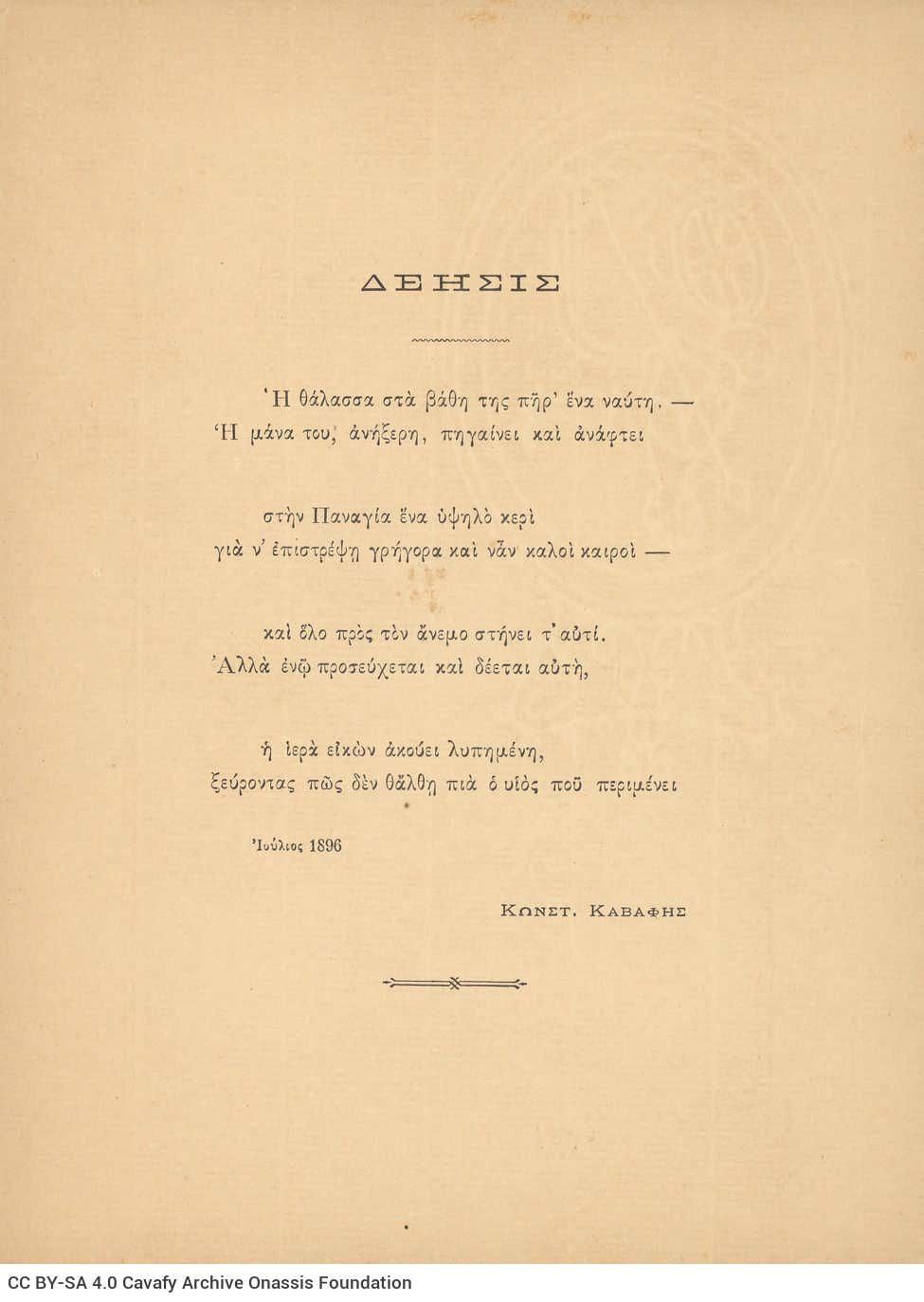
The sea engulfed a sailor in its depths. Unaware, his mother goes and lights a tall candle before the ikon of our Lady, praying for him to come back quickly, for the weather to be good— her ear cocked always to the wind. While she prays and supplicates, the ikon listens, solemn, sad, knowing the son she waits for never will come back. (July 1896)
(translation: Edmund Keeley and Philip Sherrard)
Read Next
samuel johnson on parental responsibility
on our moral obligation to ensure our children's well-being.
my grandma and Oracle ($ORCL)
what my grandma and Oracle have in common, and why I'm buying long-dated puts on one of them.
when you get too close, you only hear the noise
In the presence of randomness, high-frequency observation obscures signal. Why Djokovic's 55% point wins reveal less than his 88% match record.
ethics in opaque worlds (or the mba nerd and consequentialism)
that fact does not make moral reasoning impossible. It changes its character.
It means we should be cautious about moral frameworks that depend on precise enumeration of outcomes, and more respectful of constraints that have survived because they may protect society from certain failure modes.